 +91- 9692108108
Adult and Paediatric Spine Deformity Surgery
(Expert correction of scoliosis, kyphosis, and complex spine curvatures across all ages)
When someone walks in with a curved spine, they’re not just bent on an X-ray — their posture, balance, and confidence are often affected too. I’ve met children whose parents first noticed a shoulder height difference in photos. I’ve met adults who ignored a mild tilt until back pain made daily life hard. At Bangalore Back, we look beyond the X-ray. Every curve has a story — and every story deserves a straight, confident outcome.
Understanding the Condition
Spinal deformities come in many forms — scoliosis, kyphosis, post-traumatic curves, and those caused by degeneration in adulthood. For some, it appears in the teenage growth spurt; for others, it’s the result of years of wear and tear. Whatever the reason, our aim remains the same: restore natural balance and stop the curve from stealing comfort and mobility.
I personally plan every deformity case using 3D and AI-based surgical simulations. It lets us predict correction angles before surgery so we can go in with precision rather than guesswork.
What the Surgery Does
Deformity correction surgery is about straightening the spine safely — not forcefully. We remove tight tissues, release the stiff parts, and realign the vertebrae using screws and rods. In growing children, expandable systems allow the spine to lengthen naturally as they grow.
The purpose is not just to make the back “look straight,” but to make the whole person feel upright again — breathing easier, walking better, and standing taller.
Why It Happens
In children or adolescents, the usual culprits are:
- Idiopathic scoliosis (no clear cause)
- Birth-related vertebral malformations
- Neuromuscular conditions like cerebral palsy or muscular dystrophy
In adults, the curve can develop from:
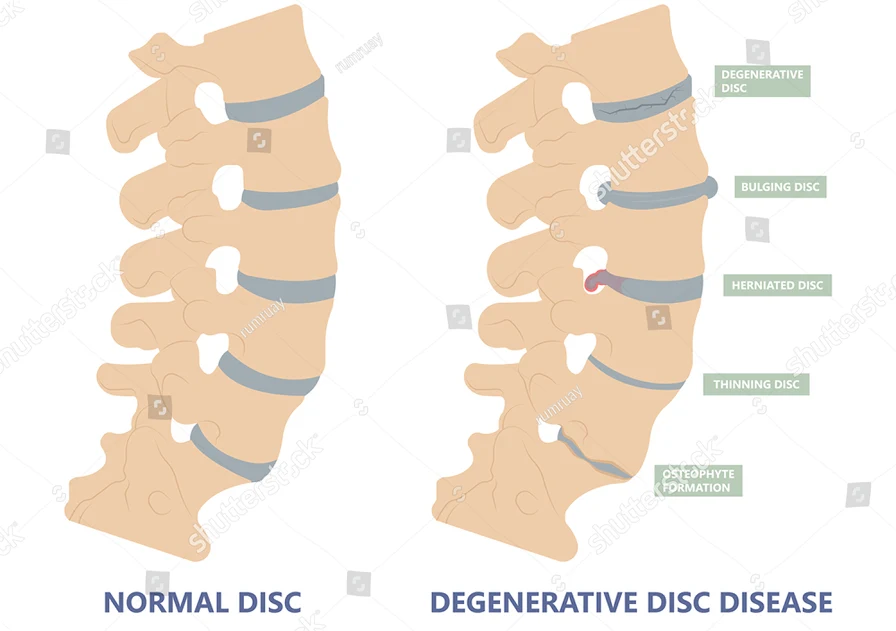
- Degenerative scoliosis due to ageing discs
- Old trauma or infection
- Ankylosing spondylitis or flat-back after previous surgery
When to Consider Surgery
Not everyone needs an operation. We advise it when:
- The spinal curve keeps increasing despite bracing
- Pain or imbalance limits activity
- There’s visible cosmetic concern or breathing difficulty
- The curve crosses 40–50° in a growing child or 60° in adults
- Nerves are compressed, causing weakness or numbness
“Our goal is never just to straighten an X-ray,” I often tell families. “It’s to help that child or adult live without the physical and emotional weight of a bent spine.”
Our Surgical Approach
Planning is everything. At Bangalore Back, each deformity case is digitally mapped in advance. We use robotic guidance, neuromonitoring, and intra-operative CT so every screw is placed exactly where it should be.
Depending on flexibility and severity, we may perform:
- Posterior spinal fusion with pedicle screw fixation
- Osteotomies (Ponte, Smith-Peterson, or pedicle subtraction) for rigid curves
- Vertebral column resection (VCR) for severe deformities
- Growing rod systems or magnetically controlled rods for children
- Combined anterior–posterior fusion for large structural curves
- Minimally invasive deformity correction in select adult cases
 Request an appointment
Lorem ipsum dolor
Why Patients Trust Bangalore Back
- Every spine is mapped in 3D before surgery
- Robotics and AI enhance accuracy — judgment guides the final decision
- Dedicated pediatric deformity protocols with child-friendly rehab
- Integrated support from ICU to physiotherapy under one roof
- Transparent counseling and long-term follow-up for peace of mind
Dr. Abhishek Mannem has performed over 1,000 deformity and reconstructive spine surgeries with a focus on precision, safety, and natural alignment.
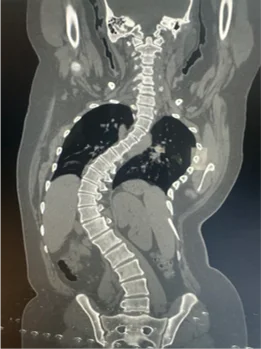
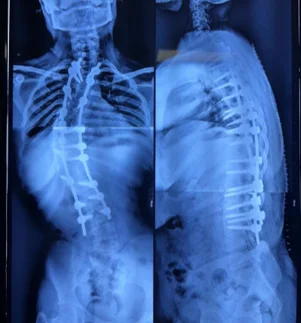
Before & After Clinical Gallery
We showcase real patient cases (with consent), including:
- Pre- and Post-operative MRIs and X-rays
- Disc Herniations, Stenosis, and Spondylolisthesis cases
- Visible improvement in alignment and decompression
Recovery And Rehabilitation
Recovery starts early — we get most patients walking within two days. Children usually adapt faster; adults need a few more days of physiotherapy and posture training.
Typical Recovery Path:
- Hospital stay: 4–7 days
- Walking: Within 48 hours
- Brace (if advised): 6–12 weeks
- Back to school or office: 4–8 weeks
- Rehab: Core strengthening, posture work, and flexibility exercises
We keep families closely involved. Parents learn how to help their child sit, turn, and sleep safely during recovery — because confidence at home speeds healing in hospital.
FAQ’s
Is spine deformity surgery safe?
Will my child still grow afterward?
What success rate can we expect?
Will I have pain after surgery?
Can adults undergo deformity correction?
Is the result permanent?
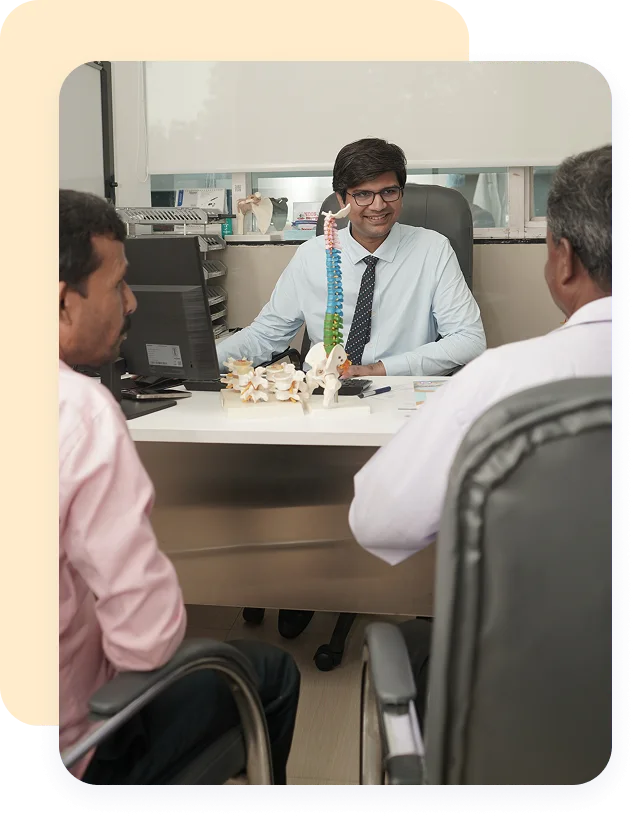
Let’s Start Fixing Your Back, Together.
Whether it’s a nagging pain, an unclear diagnosis, or a question about surgery—your spine deserves expert attention. Schedule a one-on-one consultation with Dr. Abhishek Mannem and get a personalized path to recovery.