
 +91- 9692108108
Revision Spinal Surgery
(Expert solutions for failed back surgery, implant failure, and recurrent disc herniation)
Spine surgery is meant to relieve pain and restore function — but occasionally, things don’t go as planned. I often meet patients who have already undergone a spine operation elsewhere yet continue to struggle with persistent pain, weakness, or imbalance. These cases need more than a repeat surgery — they need a clear diagnosis, precise planning, and careful execution.
At Bangalore Back, my team and I focus extensively on revision spine surgery, where we correct or improve the outcome of previous procedures. With advanced imaging, AI-assisted surgical planning, and navigation-guided accuracy, we’ve helped many patients regain comfort, mobility, and confidence after a failed spine surgery.
Understanding Revision Spine Surgery
Revision spine surgery is performed to correct complications or incomplete results from an earlier operation. It may involve removing or repositioning implants, addressing non-union (pseudoarthrosis), decompressing residual nerve compression, or realigning a spinal deformity.
These procedures are technically more demanding than first-time surgeries and require an experienced surgical team familiar with complex spinal anatomy and scar tissue management.
Why Spine Surgery May Fail
- Incomplete decompression of nerves
- Misdiagnosis of the original problem
- Inadequate fusion or non-union (pseudoarthrosis)
- Hardware loosening or breakage
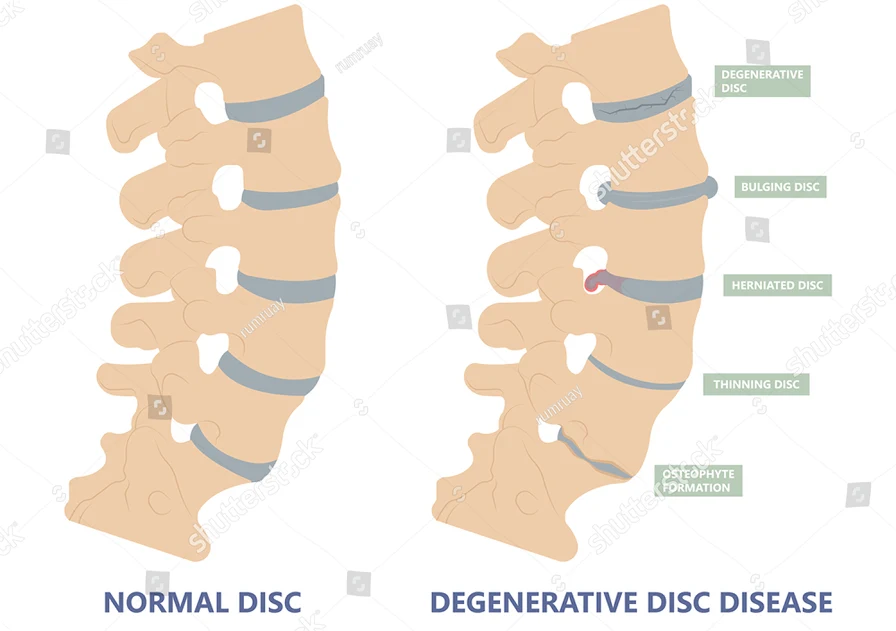
- Adjacent segment degeneration (new problem above or below prior fusion)
- Infection or scar tissue formation
- Recurrent disc herniation
How We Approach Revision Cases
Every revision surgery begins with a fresh evaluation — not an assumption. I personally review all prior reports, operative notes, and imaging before advising any intervention. Advanced diagnostic tools like MRI, CT, and dynamic X-rays help us identify the exact reason for failure.
Once the issue is clear, we plan the correction digitally using AI-based 3D models and execute it with navigation, robotics, and neuromonitoring for absolute precision.
When to Consider Revision Surgery
Revision surgery is considered when pain, neurological symptoms, or instability persist despite initial surgery. It is also indicated if imaging reveals implant failure, unresolved compression, or deformity progression.
Common warning signs include:
- Persistent or worsening back/leg pain after surgery
- Recurrent shooting pain or numbness in limbs
- Weakness, instability, or imbalance
- Prominent or broken implants
- Infection, swelling, or wound complications
Surgical Techniques We Offer
Depending on the underlying issue, revision surgery may involve:
- Implant removal or repositioning
- Re-do Discectomy (Recurrent Herniation)
- Revision Lumbar / Cervical Fusion (TLIF, PLIF, ALIF, ACDF)
- Correction of pseudoarthrosis (non-union)
- Osteotomies or vertebral column resection for deformity correction
- Endoscopic decompression in select recurrent disc cases
- Infection clearance and re-stabilization
 Request an appointment
Lorem ipsum dolor
Why Patients Choose Bangalore Back
- Dedicated expertise in revision and complex spine surgery
- AI-assisted planning and robotic precision for re-operations
- Multidisciplinary support – anesthesia, ICU, and rehab under one roof
- Transparent communication with realistic expectations
- Documented outcomes and personalized follow-up care
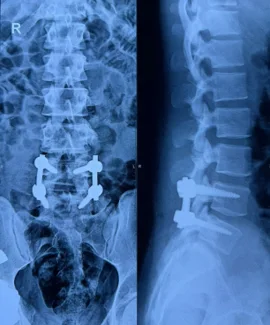
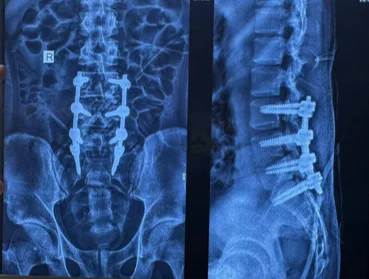
Before & After Clinical Gallery
We showcase real patient cases (with consent), including:
- Pre- and Post-operative MRIs and X-rays
- Disc Herniations, Stenosis, and Spondylolisthesis cases
- Visible improvement in alignment and decompression
Recovery And Rehabilitation
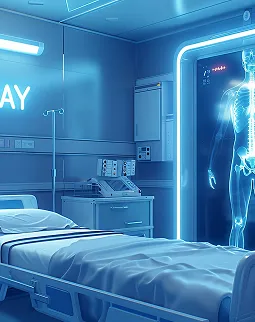
Recovery after revision spine surgery varies by complexity, but our enhanced recovery program focuses on early mobility, pain control, and functional restoration.
Typical Recovery Path:
- Hospital stay: 3–7 days depending on the procedure
- Walking: 24–48 hours post-surgery in most cases
- Brace: Used selectively for 4–6 weeks
- Return to work: 3–6 weeks (desk jobs)
- Rehabilitation: Targeted physiotherapy, posture correction, and gradual strengthening
We place equal emphasis on patient education — understanding what went wrong, how it was fixed, and what steps ensure lasting success. That knowledge empowers patients and prevents future recurrences.
FAQ’s
Is revision spine surgery safe?
Do I need revision surgery if my pain persists?
Can revision surgery fix a failed fusion?
Is recovery longer than the first surgery?
Can I still have minimally invasive revision surgery?
What are the chances of full relief?
Let’s Start Fixing Your Back, Together.
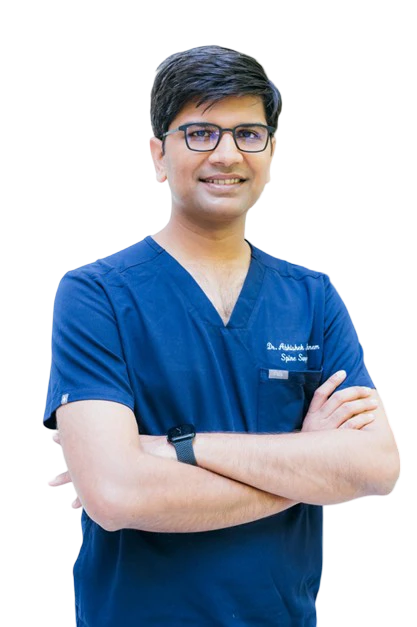
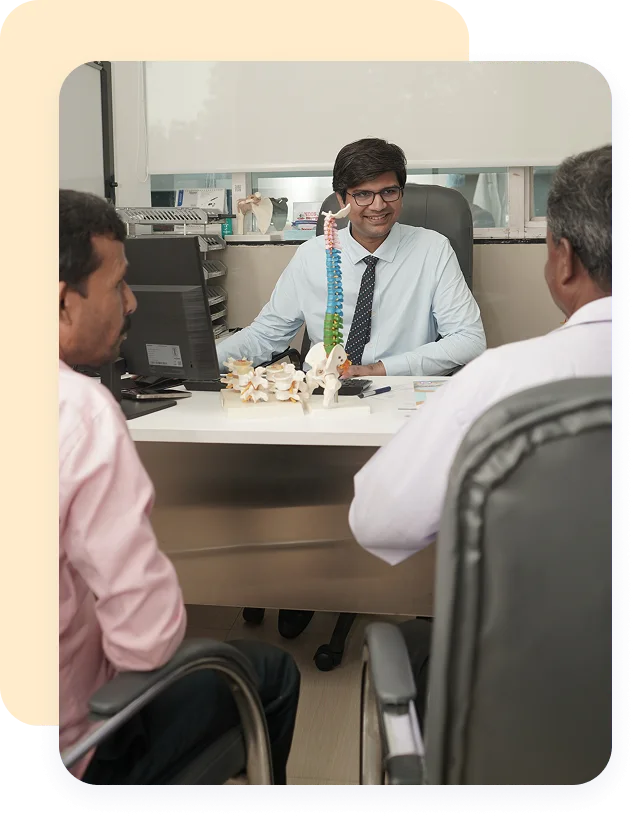
Whether it’s a nagging pain, an unclear diagnosis, or a question about surgery—your spine deserves expert attention. Schedule a one-on-one consultation with Dr. Abhishek Mannem and get a personalized path to recovery.