
 +91- 9692108108
Sports & Overuse Spine Injuries Treatment
(Specialised treatment for athletes, fitness enthusiasts, and high-performance spine injuries by Dr Abhishek Mannem | Bangalore Back)
Sports spine injuries are not always dramatic. Many of the athletes I see at Bangalore Back walk into my clinic with a story that begins weeks earlier—a stiff back after deadlifts, a sharp pinch during a cricket swing, a lingering neck ache after long hours on the tennis court, or tightness that became part of their training routine. What starts as a ‘small issue’ slowly affects posture, balance, strength, and ultimately performance.
Whether it’s a marathon runner preparing for race season or a gym enthusiast increasing their weights, repeated micro‑trauma accumulates silently. The spine takes the load—discs absorb impact, facet joints compensate, muscles tighten, and core stability fluctuates. If ignored, a correctable imbalance can evolve into chronic pain or nerve irritation. At Bangalore Back, I focus on understanding the athlete’s training pattern, biomechanics, and lifestyle before making a treatment decision. Every sport demands a different spine; every athlete requires an individualised plan.
Understanding Sports & Overuse Spine Injuries
Overuse injuries develop gradually due to repetitive motion, muscular fatigue, poor technique, inadequate warm‑up, or sudden changes in training intensity. Athletes in Bangalore—especially those engaged in cricket, running, badminton, powerlifting, CrossFit, and cycling—expose their lumbar and cervical regions to high mechanical stress. This repeated strain leads to micro‑tears, disc dehydration, ligament stretching, and joint inflammation.
In young athletes, the bone is still developing, making them prone to stress fractures such as spondylolysis. In high‑intensity trainers, disc irritation or early prolapse is common. Without early correction, an injury that began as mild discomfort can lead to nerve compression or altered spine mechanics.
Types of Sports & Overuse Spine Injuries
- Lumbar strain from heavy lifting or incorrect deadlift posture
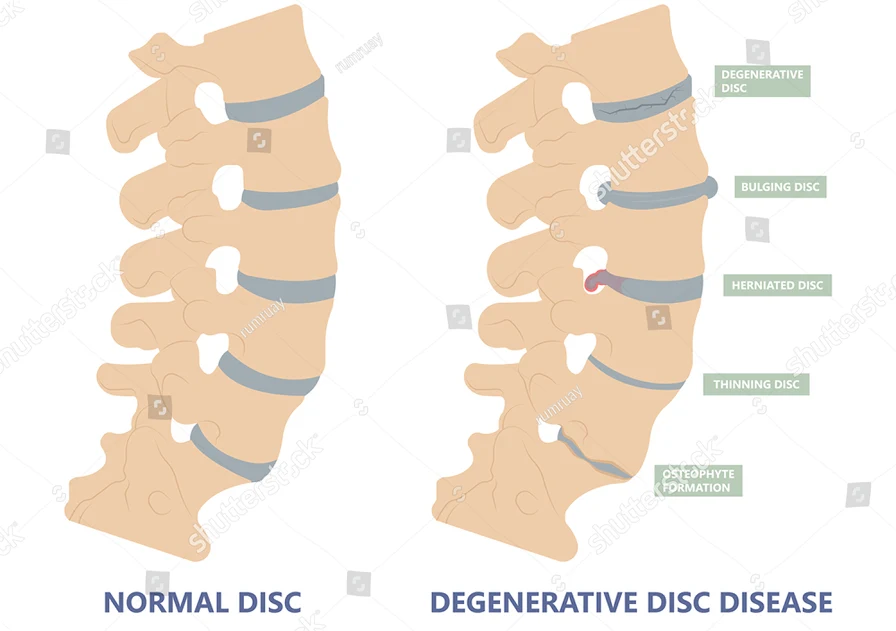
- Disc irritation or early disc prolapse in weight training athletes
- Facet joint inflammation from hyperextension or repeated bending
- Spondylolysis in young athletes performing repeated extensions (cricket fast bowlers, gymnasts)
- Stress-related spondylolisthesis due to continuous high-load activity
- Thoracic stiffness in swimmers, golfers, and racket sport players
- Upper back muscular imbalance from intense cross‑training routines
Common Causes
- Rapid escalation in training intensity without proper conditioning
- Improper technique in weightlifting, especially squats and deadlifts
- Repetitive long-duration sports (running, cycling, swimming)
- Poor core muscle activation or muscle imbalance between back and abdomen
- Overuse of spine in racket sports involving twisting and rotation
- Weak gluteal stability leading to compensatory strain on lumbar spine
- Lack of adequate warm-up or cool-down routines
- Training on uneven surfaces or using improper footwear
Symptoms and Warning Signs
- Persistent dull ache or sharp pain after training
- Pain that improves with rest but returns during activity
- Restricted movement or stiffness during overhead or twisting actions
- Radiating discomfort into legs or arms
- Difficulty with explosive movements like sprinting or jumping
- Muscle tightness or spasms limiting training volume
- Drop in performance or endurance due to pain
When Surgery Is Required
Most sports spine injuries do not require surgery. However, surgical treatment becomes necessary when:
- Pain persists for months despite structured physiotherapy
- There is disc herniation compressing nerve roots
- Progression of spondylolysis into spondylolisthesis
- Weakness or neurological symptoms develop
Surgical approaches are minimally invasive, preserving muscle integrity and enabling early return to activity. Wherever possible, surgery is designed to restore biomechanics without compromising athletic potential.
Evaluation at Bangalore Back
Every athlete’s spine functions differently depending on their sport. I begin by analysing training techniques, movement patterns, posture, footwear, load distribution, and recovery cycles. Clinical assessment includes strength testing, flexibility evaluation, gait analysis, and spine-specific maneuvers.
Imaging such as X-ray or MRI is used only when necessary to confirm structural injury, early disc degeneration, or stress fractures. The objective is not to limit training but to restore safe biomechanics and prevent progression. Many athletes resume activity within days once the underlying issue is corrected.
Treatment Strategies at Bangalore Back
- Targeted physiotherapy with sport‑specific neuromuscular reactivation
- Corrective exercise programmes to address core imbalance and posture defects
- Manual therapy, dry needling, and myofascial release to reduce tightness
- Strength conditioning to improve endurance of spinal stabilisers
- Inflammation control via medication or focussed therapy
- Image-guided injections for persistent facet or nerve irritation
- Gradual return-to-sport plan tailored to athlete’s competitive timeline
- Advice on footwear, technique refinement, and load modulation
 Request an appointment
Lorem ipsum dolor


Why Athletes Choose Bangalore Back
- Expertise in athletic spine biomechanics and overuse patterns
- Tailored treatment plans based on specific sport demands
- Collaboration with physiotherapists experienced in sports conditioning
- Minimally invasive options for structural injuries requiring surgery
- Complete athlete-centred care from diagnosis to performance restoration
Before & After Clinical Gallery
We showcase real patient cases (with consent), including:
- Pre- and Post-operative MRIs and X-rays
- Disc Herniations, Stenosis, and Spondylolisthesis cases
- Visible improvement in alignment and decompression
Recovery And Rehabilitation

Rehabilitation is central to athlete recovery. It begins with pain reduction and mobility restoration, followed by controlled reintroduction of training motions. We focus on core strengthening, flexibility, balance, and endurance. Strength deficits, compensatory movement patterns, and tight muscle groups are addressed. Once baseline stability is regained, sport-specific drills and load training are gradually resumed under supervision.
Prevention is also emphasised—correct warm-up routines, hydration, technique refinement, cross‑training strategies, and rest cycles. This approach helps athletes return to sport stronger, safer, and with improved performance.
FAQ’s
Are all sports spine injuries serious?
Can I continue training through pain?
Do I need MRI immediately?
How long until I can return to sport?
Is surgery common in athletes?
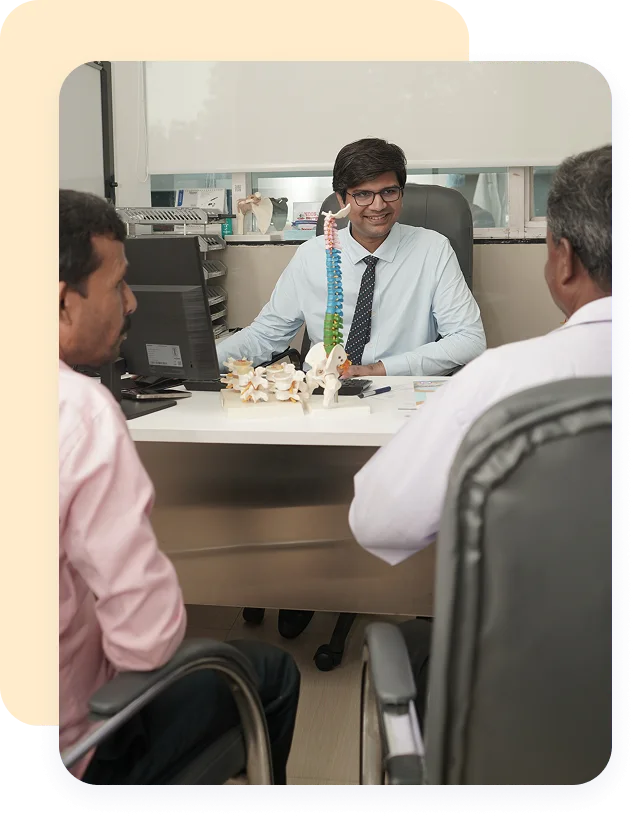
Let’s Start Fixing Your Back, Together.
Whether it’s a nagging pain, an unclear diagnosis, or a question about surgery—your spine deserves expert attention. Schedule a one-on-one consultation with Dr. Abhishek Mannem and get a personalized path to recovery.